_edited.png)
Multi-Language Website: Unlocking Global Reach and SEO


Expanding your Hungarian e-commerce business to reach new international markets can feel overwhelming when language barriers stand in the way. Understanding the role of a multilingual website is crucial for connecting with customers worldwide and achieving stronger SEO results. This guide highlights comprehensive language support and cultural localization—proven methods for creating authentic, engaging experiences that drive global growth.
Table of Contents
Key Takeaways
Point | Details |
Cultural Localization is Essential | A multilingual website should adapt not just the language, but also visual elements and cultural references for different regional audiences. |
Choose the Right Implementation Strategy | Decide between subdomains, subdirectories, or country code domains based on SEO, user control, and maintenance efforts to optimize performance. |
Prioritize User Experience | Successful multilingual sites create seamless navigation and ensure content feels native, enhancing user engagement and satisfaction. |
Avoid Common Mistakes | Invest in professional translation and localization services to prevent issues like literal translations and poor design, which can hinder user experience. |
Core Definition and Key Concepts
A multilingual website represents a sophisticated digital platform that goes far beyond simple translation. Offering content across multiple languages, these websites create seamless user experiences for diverse global audiences.
The core concept involves more than converting words from one language to another. True multilingual websites integrate cultural localization - adapting visual elements, idioms, and design to feel native and relevant to specific regional audiences. This approach ensures that content resonates authentically with users worldwide.
Key characteristics of multilingual websites include:
Comprehensive language support beyond direct translation
Cultural adaptation of graphics, layouts, and communication styles
Geographically targeted URL structures
Responsive design that accommodates different language text lengths
Seamless navigation across language variants
Effective international web strategies recognize that language is more than words - it’s about creating meaningful connections. Hungarian businesses expanding globally must understand that users prefer engaging with content that feels specifically crafted for their cultural context.
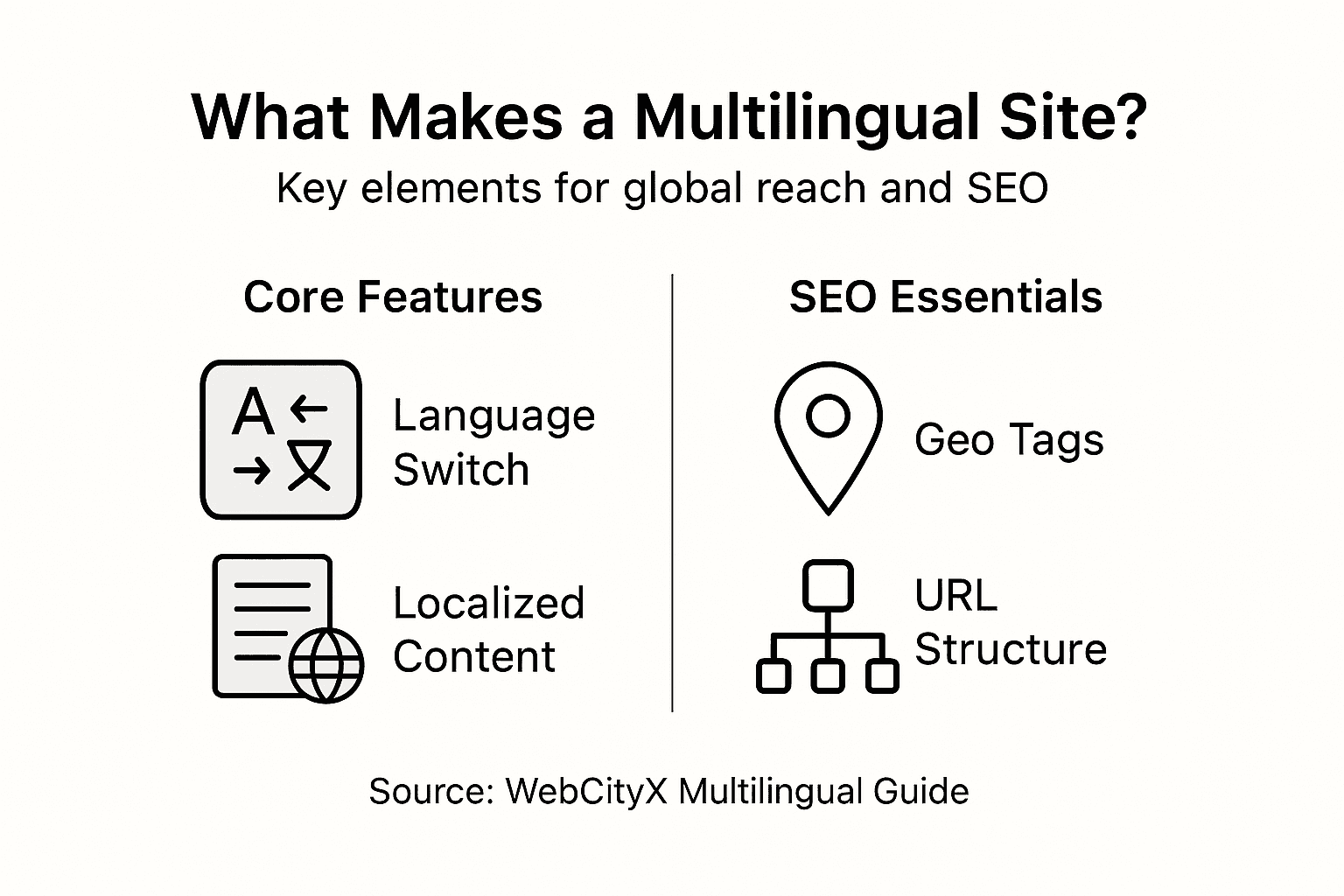
Technical Implementation involves strategic considerations like choosing appropriate URL structures (country code top-level domains, subdirectories, or subdomains) and implementing robust translation management systems. These technical foundations determine how effectively a multilingual website can reach and engage international audiences.
Pro Tip: Invest in professional localization services rather than relying solely on automated translation tools to ensure authentic, culturally sensitive content.
Types of Multi-Language Websites
Multi-language websites come in various formats, each with unique technical approaches and strategic implications for global businesses. Multilingual website types range from basic translation solutions to sophisticated, culturally nuanced platforms designed to engage international audiences effectively.
The primary categories of multilingual websites include:
Machine Translation Websites
Automated translation using digital tools
Lowest cost implementation
Limited cultural adaptation
Potential for translation errors
Manually Translated Websites
Human-performed translations
Higher accuracy and cultural relevance
More time and resource-intensive
Better user experience
Fully Localized Websites
Complete cultural and linguistic adaptation
Custom content for specific regional audiences
Highest engagement potential
Most complex and expensive approach
Multilingual website structures can be implemented through different technical configurations. Common approaches include using subdomains (lang.website.com), subdirectories (website.com/lang), or entirely separate domains for each language variant.
Technical Configurations significantly impact website performance, SEO, and user navigation. Hungarian businesses must carefully evaluate which approach best suits their specific international expansion goals, considering factors like budget, target markets, and technical infrastructure.
Successful multilingual websites prioritize user experience over pure translation, ensuring content feels native and culturally appropriate.
Pro Tip: Choose a multilingual approach that balances technical complexity, budget constraints, and authentic user engagement for your specific international market strategy.
How Multi-Language Functionality Works
Multi-language functionality transforms websites into powerful global communication platforms by enabling dynamic content adaptation across different linguistic environments. Multilingual website integration involves sophisticated technical mechanisms that allow seamless language switching and content management.
The core technical components of multi-language functionality include:
Language Detection Systems
Automatically identify user’s preferred language
Use browser settings or explicit user selection
Redirect to appropriate language version
Maintain user’s language preference across sessions
Content Management Strategies
Central translation management interface
Ability to add/edit translations manually
Support for machine translation options
Maintain consistent content across language variants
Multilingual website APIs provide robust frameworks for implementing complex language switching mechanisms. These technical infrastructures enable websites to dynamically present content, ensuring that each visitor experiences the site in their preferred language.

Technical Implementation requires careful consideration of URL structures, such as using subdomains (lang.website.com), subdirectories (website.com/lang), or separate domains. Each approach impacts SEO, user experience, and site performance differently.
Here’s a comparison of multilingual technical implementation methods:
Method | SEO Impact | User Control | Maintenance Effort |
Subdomains | Moderate | Clear | Separate setups needed |
Subdirectories | High | Centralized | Easier to manage |
Country code domains | High | Strong branding | Most complex, costly |
Effective multi-language functionality goes beyond simple translation, creating a truly localized digital experience that feels native to each user.
Pro Tip: Select a multilingual implementation strategy that balances technical complexity with seamless user experience, prioritizing smooth language transitions and consistent content quality.
Wix and Wix Studio Integration Essentials
Multilingual website development in Wix Studio requires sophisticated technical integration that enables seamless content management across different language variants. Multilingual content configuration involves leveraging specialized development tools and packages designed to streamline translation processes.
Key integration components for Wix and Wix Studio multilingual websites include:
Translation Management Tools
@wix/multilingual package installation
Automated and manual translation support
Content variant tracking and management
Seamless language switching mechanisms
Technical Configuration Requirements
Backend SDK integration
Language detection and routing
Content synchronization across variants
Performance optimization for multilingual sites
The integration process demands careful planning and strategic implementation. Developers must configure translation workflows, implement language-specific routing, and ensure consistent content presentation across different linguistic versions of the website.
Implementation Strategies involve selecting appropriate technical architectures that support dynamic content adaptation. Hungarian businesses can leverage Wix Studio’s robust multilingual frameworks to create globally accessible digital experiences tailored to specific regional audiences.
Successful Wix Studio multilingual integration transforms websites from local platforms to global communication channels.
Responsive design strategies play a critical role in ensuring that multilingual websites maintain optimal performance and user experience across different devices and language settings.
Pro Tip: Invest time in thorough testing of language switching mechanisms and content consistency to prevent potential user experience disruptions.
Compliance Risks and Accessibility Challenges
Multilingual websites face complex legal and technical challenges when ensuring digital accessibility across different language environments. Accessibility compliance guidelines require comprehensive strategies that go beyond simple translation and address diverse international regulatory requirements.
Key accessibility compliance challenges include:
Technical Accessibility Barriers
Screen reader compatibility across languages
Semantic markup consistency
Alternative text translation accuracy
Cross-language keyboard navigation support
Legal and Regulatory Risks
Varying international accessibility standards
ADA and WCAG compliance requirements
Potential legal liability for non-compliance
Reputational damage from exclusionary design
Digital accessibility challenges extend far beyond technical implementation, requiring ongoing monitoring and proactive inclusive design strategies. Hungarian businesses must develop sophisticated approaches that address both technical and legal dimensions of multilingual digital accessibility.
Compliance Strategies demand a holistic approach that integrates universal design principles, comprehensive testing, and continuous evaluation of accessibility across all language variants. This involves not just translating content, but ensuring that every version maintains equal usability for users with diverse abilities.
Successful multilingual accessibility goes beyond legal compliance, creating truly inclusive digital experiences that welcome all users regardless of language or ability.
Pro Tip: Conduct regular accessibility audits across all language versions and invest in specialized testing tools that evaluate compliance from multiple perspectives.
Common Mistakes and Quality Pitfalls
Multilingual website development requires meticulous attention to detail, with numerous potential pitfalls that can compromise user experience and global market effectiveness. Common translation mistakes can significantly undermine a company’s international digital strategy.
Critical mistakes Hungarian businesses must avoid include:
Translation Quality Issues
Overreliance on machine translation
Neglecting professional human review
Ignoring cultural context and nuances
Literal word-for-word translations
Technical and Design Failures
Inconsistent language selector placement
Poor responsive design across languages
Inadequate character encoding support
Complex navigation in multiple languages
Multilingual design challenges extend beyond simple text translation. Successful implementations require comprehensive cultural research, strategic localization, and nuanced understanding of target audience preferences.
Localization Depth determines a multilingual website’s effectiveness. Simply translating content word-for-word fails to capture cultural subtleties, potentially alienating international audiences and undermining brand communication strategies.
Below is a summary of common multilingual website pitfalls and the benefits of avoiding them:
Pitfall to Avoid | Potential Consequence | Benefit of Avoidance |
Literal translation | Miscommunication, confusion | Authentic, clear messaging |
Poor language selection UI | User frustration | Smoother navigation |
Incomplete encoding | Broken characters, lost meaning | Consistent, error-free sites |
Ignoring localization | Cultural disconnect | Stronger user engagement |
Effective multilingual websites are not just translated, they are culturally reimagined for each target audience.
Pro Tip: Invest in professional linguistic and cultural consultation to ensure your multilingual content resonates authentically with each target market.
Expand Your Global Presence with Expert Multilingual Website Solutions
Navigating the complexities of multilingual website development can be overwhelming. From ensuring authentic cultural localization to managing SEO-friendly language structures and accessibility compliance, the challenges are real. If you want to avoid common pitfalls like relying solely on machine translations or struggling with inconsistent language switching, professional guidance is crucial. Embracing a fully localized approach not only boosts engagement but unlocks a global audience for your brand.

Discover how WebCityX specializes in tailored web design, SEO, and technical support for Wix and Wix Studio sites to transform your multilingual ambitions into impactful realities. Our expertise ensures your website speaks the language of every visitor with seamless navigation, culturally relevant content, and optimized performance. Act now to turn language barriers into opportunities by visiting WebCityX and explore how our multilingual website services can elevate your global reach starting today.
Frequently Asked Questions
What is a multilingual website?
A multilingual website is a digital platform that provides content in multiple languages, integrating cultural localization to enhance user experience across diverse global audiences.
How does cultural localization impact multilingual websites?
Cultural localization adapts visual elements, idioms, and communication styles to ensure the content feels native and relevant to specific regional audiences, enhancing user engagement.
What are the different types of multilingual websites?
The main types include machine translation websites, manually translated websites, and fully localized websites, each varying in accuracy, cultural relevance, and cost.
What are common mistakes to avoid when developing a multilingual website?
Common mistakes include overreliance on machine translation, neglecting cultural nuances, inconsistent navigation, and inadequate technical support for different languages.
Recommended
